

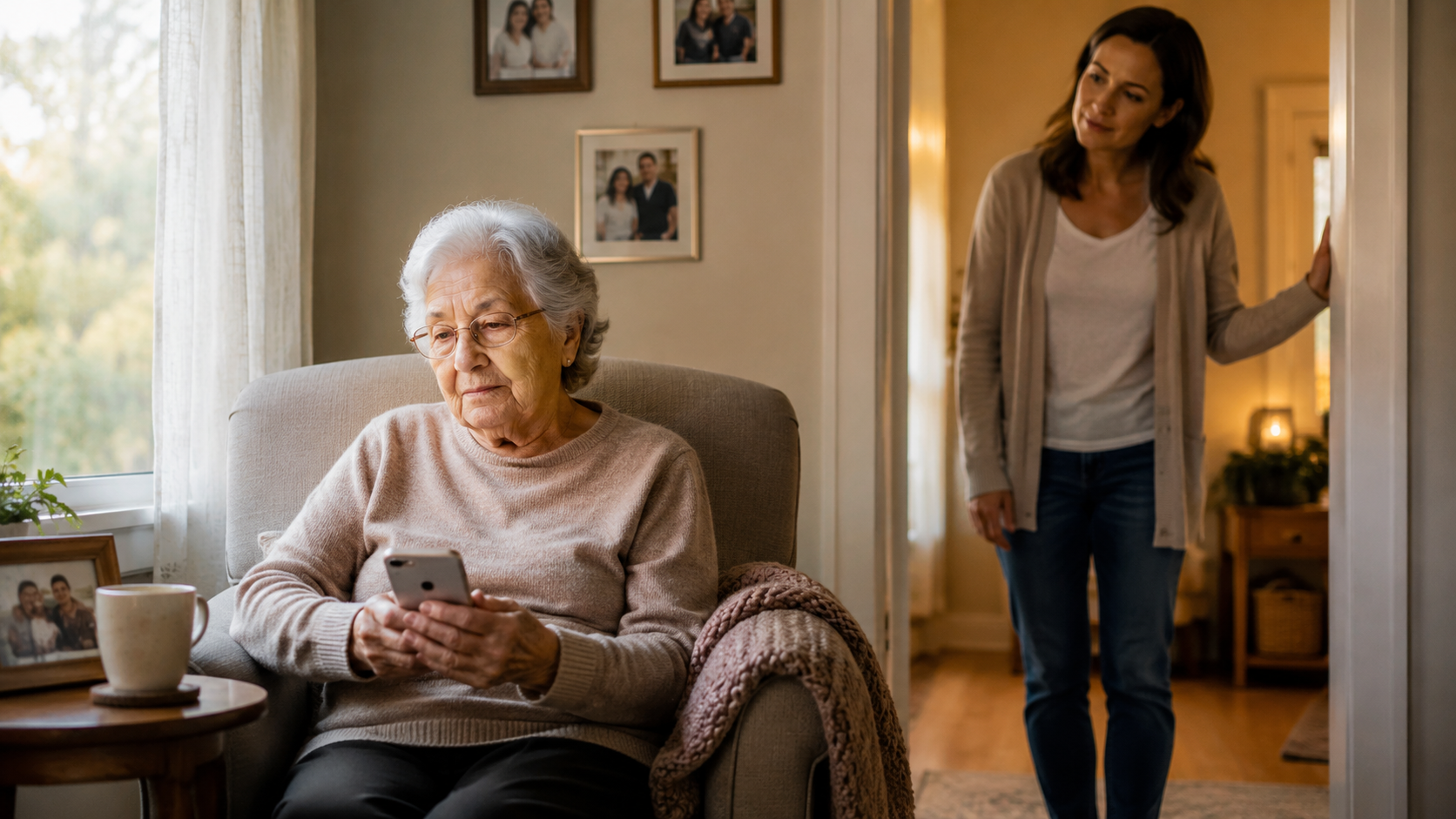
Sometimes, I can not get this thought out of my head: what if my mother feels lonely?
It bothers me more than I would like to admit. I often wish I had more time to spend with her. As many of us know, loneliness can brutally affect seniors’ health. While reading an article from the National Institute on Aging, I learned that prolonged loneliness and social isolation may be linked to depression, heart disease, cognitive decline, and even an increased risk of Alzheimer’s disease and dementia.
It is scary, isn’t it?
And it brings a lot of stress and guilt. I start asking myself: what exactly is my responsibility here? What can I actually do? How much is enough?
One point that stood out to me in the article was the difference between loneliness and social isolation. They are not the same thing. Many seniors live alone but do not necessarily feel lonely. At the same time, someone can be surrounded by people and still feel disconnected.
That sounds familiar, doesn’t it?
Lonelinessis not just about being physically alone. It is the feeling that something is missing. It is the feeling of not being seen, not being heard, or not feeling truly connected to others.
The article also explained that chronic loneliness is real and deserves attention. Younger adults often find ways to distract themselves when they feel lonely. We call a friend, go for a walk, listen to music, work out, or throw ourselves into work or hobbies.
When I feel lonely, I usually put on my headphones and listen to music loudly. My mother, on the other hand, may spend hours doom-scrolling on her phone. And that worries me too, because scrolling is not the same as connection. It may pass the time, but it does not always make someone feel loved, included, or emotionally supported.
Seniors are often more vulnerable to loneliness than younger people. They may deal with physical limitations, illness, retirement, grief, or the loss of people who used to be part of their daily life. These changes can slowly affect their mental state. They may not be able to go for long walks, exercise with energy, or easily meet new people the way younger adults can.
Health conditions can make this even harder. For example, a senior diagnosed with Alzheimer’s disease or dementia may struggle with conversation, memory, or social situations. Sadly, their company may not always feel easy for everyone.They may sense that, feel less welcomed, and gradually distance themselves from others.
This is where loneliness becomes more than just a sad feeling. It can turn into a cycle. A senior feels disconnected, then withdraws more, and the more they withdraw, the harder it becomes to reconnect.
Thinking about this has made me worry about my mother many times. Like many adult children, I sometimes feel guilty and wonder whether I am doing enough. But the truth is, no matter how much I love my mother, I also have my own life, work, responsibilities, and future to take care of.
And maybe that is where I need to think more practically.
The solution cannot be only spending every available minute with her. Of course, quality time matters. A phone call, a visit, a walk, or a shared meal can mean a lot. But one person cannot become someone’s entire world. That is too much pressure, and it may not even solve the deeper problem.
What can be more helpful is building a wider support system around seniors. Friends, neighbors, community groups, social activities, family members, and professional companionship care can all play a role.
Maybe the better question is not:
“How can I be there for my mother every moment?”
Maybe the better question is:
“How can I help my mother feel connected, supported, and valued even when I am not around?”
That is why community is so important.
Community is not just being surrounded by other people. It is not simply sitting in the same room with someone or being part of a crowd. Real community means belonging. It means feeling that your presence matters. It means people notice you, remember you, and care whether you are okay.
For seniors, this kind of connection can be deeply protective. It can give them routine, emotional comfort, confidence, and a reason to stay engaged with life.
And honestly, this thought can be helpful for me too. Instead of letting guilt eat me up, I can focus on practical solutions. I can spend meaningful time with my mother, but I can also help her find connection beyond me.
Because at the end of the day, love should not only create guilt. It should also help us build better support, better routines, and a stronger sense of belonging for the people we care about.

For more information or to schedule a tour, contact a sales consultant who can help you decide which community.